



Geneva, 15 September 2011 – New figures released today by ITU show that information and communication technology (ICT) uptake continues to accelerate worldwide, spurred by a steady fall in the price of telephone and broadband Internet services.
The new data, released in ITU’s flagship annual ICT report ‘Measuring the Information Society 2011’, rank the Republic of Korea as the world’s most advanced ICT economy, followed by Sweden, Iceland, Denmark and Finland.
A key feature of the report is the ICT Development Index (IDI)*, which ranks 152 countries according to their level of ICT access, use and skills, and compares 2008 and 2010 scores. Most countries at the top of the ranking are from Europe and Asia Pacific. The United Arab Emirates and Russia rank first within their respective regions and Uruguay ranks highest in South America. Saudi Arabia, Morocco, Viet Nam, and Russia were some of the most dynamic countries between 2008 and 2010, with all of them making substantial improvements in their IDI ranks.
All countries included in the IDI improved their scores this year, underlining the increasing pervasiveness of ICTs in today’s global information society. “While the IDI leaders are all from the developed world, it is extremely encouraging to see that the most dynamic performers are developing countries,” said Dr Hamadoun Touré, ITU Secretary-General. “The ‘mobile miracle’ is putting ICT services within reach of even the most disadvantaged people and communities. Our challenge now is to replicate that success in broadband.” This report shows that while ICT and income levels are closely related, getting the right public policy mix can drive faster take-up and a number of countries, including Australia, Japan, New Zealand and the Republic of Korea have higher IDI levels than their income level would predict.
Mobile now ubiquitous
The spread of mobile networks in developing countries remains buoyant, with 20 per cent growth in mobile subscriptions over the past year and no signs of a slowdown.
In developed countries, on the other hand, mobile cellular penetration has reached saturation, with average penetration now over 100% at end 2010, compared with 70% in developing countries. With more than five billion subscriptions and global population coverage of over 90%, mobile cellular is now de facto ubiquitous.
Mobile broadband (‘3G’) services are also spreading quickly; by end 2010, 154 economies worldwide had launched 3G networks. Wireless broadband Internet access remains the strongest growth sector in developing countries, with mobile broadband growing by 160% between 2009 and 2010. Countries registering the highest gains in the IDI ‘ICT use’ sub-index are mostly those which have achieved a sizeable increase in mobile broadband subscriptions.
Conversely, the number of dial-up Internet subscriptions has been decreasing rapidly since 2007 and, based on current trends, the ‘death of dial-up’ is expected to become a reality over the next few years.
Affordability improves, but developing world still paying too much
Globally, telecommunication and Internet services are becoming more affordable. According to the 2010 ICT Price Basket (IPB), which spans 165 economies and combines the average cost of fixed telephone, mobile cellular and fixed broadband Internet services, the price of ICT services dropped by 18% globally between 2008 and 2010, with the biggest decrease in fixed broadband Internet services, where average prices have come down by 52%.
All economies in the IPB top ten have high GNI per capita, and, with the exception of the United Arab Emirates, all are from Europe and Asia Pacific. In developed countries, average prices for ICT services correspond to no more than 1.5. % of monthly per capita income, compared with 17% in developing countries. But while broadband prices declined sharply worldwide, a high-speed Internet connection remains unaffordable in many low-income countries. For example, in Africa at end 2010, fixed broadband services cost on average the equivalent of 290% of monthly income, down from 650% in 2008.
Big disparities in speed and service quality
Comparing fixed- and mobile broadband technologies and services, the report also finds huge differences in network capacity, speed and quality.
In many developing countries, while the minimum speed for broadband (256 kbit/s) may be sufficient for email and other very basic services, it is inadequate for graphics-rich data-intensive applications and services. In addition, the report notes that the actual speed experienced by both fixed- and mobile broadband customers is often much lower than the advertised speed, and calls on ICT regulators to take steps to encourage operators to provide consumers with clearer information on coverage, speed and prices.
“A new digital divide is unfolding between those with high-speed/capacity/quality access – as is the case in many high-income countries – and those with lower speed/capacity/quality access, as is the case in many low-income countries,” said Mr Brahima Sanou, Director of ITU’s Telecommunication Development Bureau. “Policy-makers should act swiftly to facilitate the spread of broadband and ensure that broadband services are faster, more reliable and affordable.”
The report also points to important qualitative differences between fixed- and mobile broadband services. The average speed of a mobile broadband subscription does not usually match that of a high-speed fixed subscription and usually includes data caps, unlike the ‘unlimited data’ fixed broadband offers that are now widely available. This represents a challenge for countries where mobile is the only broadband access technology available to end users – which is the case in many developing countries.
Targeting youth could be transformational
ITU research indicates that targeting students may be the most effective way to increase Internet use in developing countries. The Internet is only used by an around 21 per cent of the population in the developing world, compared with almost 70 per cent in developed countries.
The Measuring the Information Society 2011 report suggests that the main barriers to Internet use are not always related to infrastructure and price. Usage patterns show major differences related to education, gender, income, age and geographical location of users (urban/rural).
For example, there is remarkably little difference in patterns of Internet use among highly educated, high-income individuals across the developing and developed worlds. People with higher educational degrees use the Internet more than those with a lower level of education, and in most countries more men than women are online.
Young people (below the age of 25) are online more than older people, and there is a higher level of Internet use among those currently in school compared with those no longer studying. Assuming that people will continue using the Internet once they have become accustomed to being online, those currently enrolled at school or university are more likely to be future Internet users, too. For young people all over the world, social networking and user-created content like blogs have become key drivers of Internet uptake.
Given that 46 per cent of the population in developing countries is below the age of 25 (representing more than 2.5 billion people), the report suggests that one of the most effective ways to increase Internet use in these countries is by targeting the younger generation – for example through connecting schools and other educational institutions, and improving enrolment rates.
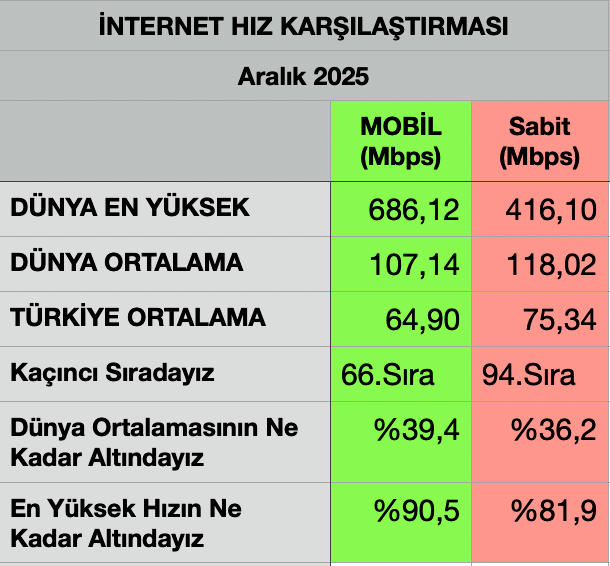 Kaynak :