



Kablosuz Tıbbi teknolojilerin tüm imkanlarını kullanarak kurulacak olan “Body Area Network – BAN”lerin korunması şarttır. Ve, milyarlarca kullanıcıya yükseldiğimiz bugünlerde en önemli sorunlardan birisi istenmeyen mesajların (spam) yönetilmesidir. Bir yandan muhteşem servisler üretiliyor ama diğer yandan bunların yönetilmesi gün geçtikçe daha da önem kazanıyor.
Bu noktada akla gelen soru, toplum olarak iyi organize olmuş durumdamıyız? The question that is raised is whether we are well-equipped as a society, and as individuals, to live in a world of technological ubiquity, a world in which an intelligent microwave warms up your dinner before you get home, or your mobile phone tells you that your spouse is late for dinner. Consider the use of tiny Radio Frequency ID tags imbedded into clothing to help retail businesses track inventory. Will these remain active once the item has been purchased and what kind of information will be collected? At the dawn of this new age, it is important to consider what effect these technologies are having on the way we grow, interact, socialize and learn.
Mobile at heart: Opportunities and Threats for the Youth Market
Mobile users are getting younger and younger. A technology-savvy segment of society, young people are enthusiastic early adopters of new mobile services. Their use of mobile “txting” (e.g. SMS, email, MMS), mobile Internet services and gaming typically exceeds that of their older counterparts. In the Republic of Korea, for example, the largest use of the mobile Internet is among junior high school students. In the Philippines, teenagers are the most avid texters. In Japan, the penetration of mobile phones among 18-year-old girls is nearing 100 per cent. Young people use mobiles to create and maintain social networks and to reflect their popularity or position in a peer group. The attitude of young people towards their mobile phones is not purely related to device functionality, but rather to their own individuality or identity. The youth market is an important predictor of how the future mobile information society will develop. Service providers and operators alike are looking at better ways to target this growing market segment. At the same time, one must ensure that young people are protected from, inter alia, inappropriate content, invasions of privacy, excessive spending, technological addiction (such as gaming addiction), and any negative health effects (e.g. sedentary lifestyles, cellular radiation). In preparation for the Workshop, a paper entitled “Mobile phones and youth: A look at the U.S. Student Market” was commissioned. The paper reports on the results of a survey of mobile usage and behaviour among high school and college students.
Riding the mobile wave in the developing world
The mobile technologies in use in developing countries are largely the same as those used in the developed world, benefiting from the economies of scale that have been achieved globally in the manufacture of handsets and base stations. But applications are often different. Prof. Jhunjhunwala presented a number of examples from India of the way in which mobile communications can be used to provide, for instance, low cost ATMs (automatic teller machines), remote education and remote health monitoring services, and open-access Internet Kiosks.
One promising concept for helping to accelerate the narrowing of the digital divide is the so-called “portable Internet”, which is a new wireless-based technology, which attempts to bridge the gap between short-range wireless LAN technologies and longer-range 3G technologies. In the Republic of Korea, some 100 MHz has been set aside in the 2.3 GHz band for portable Internet services which will offer up to 1-2 Mbit/s of bandwidth per user for an estimated 15 USD per month. Future mobile handsets would work seamlessly with existing wireless infrastructures. Potentially the biggest demand for portable Internet solutions could be in developing markets where new rollout networks are being planned, and where there is a requirement to cover low-density rural populations. It was also argued that concepts of universal service need to be updated to take account of technological developments, in particular the development of high-speed Internet services.
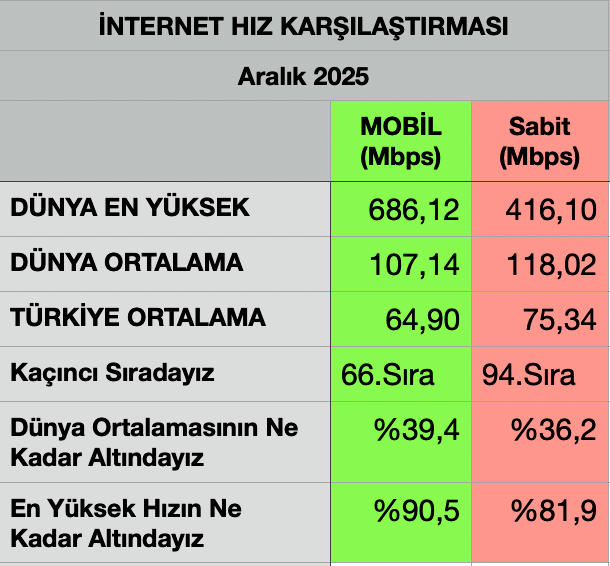 Kaynak :